


Market Validation: How to Know People Will Pay Before You Build
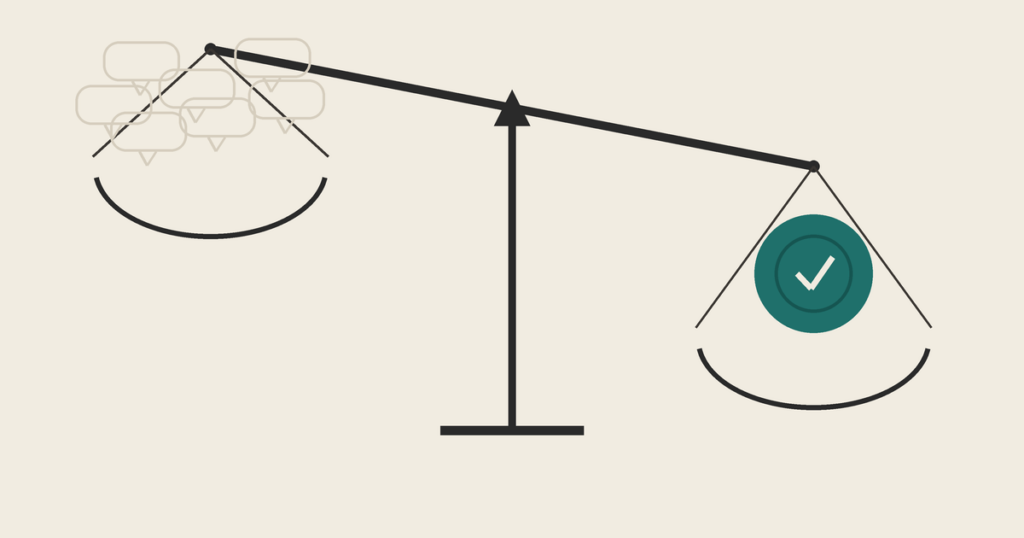
How a non-technical founder tests real demand before spending a dollar on engineering, using commitment signals instead of compliments.
A founder we talked to last year had done everything the internet told her to do. Forty coffee chats with people in her target market. A survey with 300 responses, 82% of them saying they’d “definitely use” the product. A waitlist with a few hundred emails. She read all of that as a green light, raised a small round, and spent six months and most of it building the app. At launch, the conversion from “definitely use” to “actually pays” was under two percent. The product was fine. The demand she thought she had validated was never really there.
Market validation is the work of confirming that a specific group of people will pay to have a specific problem solved, before you build the thing that solves it. Not that they like the idea. Not that the market is large. That they, the actual buyers, will part with something that costs them (money, a signed commitment, real time) to get the fix you’re offering. Everything else is research. This is the part that tells you whether to build.
For a non-technical founder the stakes are higher than for most, because you can’t prototype your way to an answer over a weekend. When you commission a custom build, the cheapest honest number for a first version starts in the tens of thousands, and the real cost is the two quarters of your life you won’t get back. Validation is the one step that protects that spend. Skip it and you’re not taking a risk, you’re taking a guess and calling it a plan.
What market validation actually is (and isn’t)
The word “validation” gets stretched to cover three different activities that are not the same thing.
Market research tells you how big the field is and who else is playing on it. Useful for a deck, close to useless for the build decision. A large market with no reachable buyers is a worse bet than a small market you can sell to on Monday.
Product discovery tells you what the problem really is, in the customer’s own words. It comes before validation and it feeds it. If you validate the wrong problem, you’ll get a clean pass on a product nobody needs.
Market validation is the narrow, uncomfortable question underneath both: will these people, the ones you can actually reach, change their behavior to get this? Behavior is the operative word. Opinions are free to give and free to walk back. A behavior costs something, and cost is what makes a signal real.
Here’s the trap that caught the founder above, and catches most people. Enthusiasm feels like data. Forty people telling you your idea is great produces a warm, specific, memorable feeling of momentum. It is not evidence. As Rob Fitzpatrick puts it in The Mom Test, “opinions are worthless.” The people in your coffee chats are being kind. Kindness is not a market.
The one rule that separates validation from wishful thinking: the currency test
Over years of watching founders commission builds, the difference between the ones who validated and the ones who fooled themselves comes down to a single question we’ve started calling the currency test: in this validation, what currency did the customer actually spend?
A currency is anything that costs the person something to give. Rank them from weakest to strongest and you get a usable scale:
- A compliment costs nothing. “I’d totally use this.” Zero signal.
- An email address costs almost nothing. A waitlist measures curiosity, not demand.
- Time costs a little. Someone who sits through a 30-minute demo and asks sharp follow-up questions is spending attention they could spend elsewhere.
- A credible commitment costs reputation. A signed letter of intent, an introduction to their boss with their name on it, a promise to be your first case study.
- Money costs money. A pre-order, a deposit, a paid pilot, a card on file. This is the top of the scale, and it’s the only currency that removes almost all the doubt.
The rule is simple: the higher the currency you can get someone to spend, the more your validation is worth. If the strongest thing anyone did was give you their email, you have a curiosity list, not validation. If someone wired you a deposit for a product that doesn’t exist yet, you can start planning the build with a clear conscience.
This is also why B2B is often easier to validate than consumer. A business buyer can sign a pilot agreement. A consumer can only really pay, and getting a stranger to pay before the thing exists is genuinely hard. That difficulty is information too. It’s telling you how much appetite is really out there.
A market validation example, start to finish
Concrete beats abstract, so here’s a real shape of it, lightly anonymized.
A founder from the accounting world wanted to build software that automated a painful monthly close process for small firms. His riskiest assumption was not “is this annoying” (obviously yes) but “will a firm owner pay a real monthly fee to make it go away, rather than keep grinding through it for free with their existing staff.”
He did not build anything. He wrote a one-page description of the outcome, priced it at $400 a month, and took it to eleven firm owners he could reach through his own network. Nine said it sounded great. That’s the compliment layer, and he’d learned to discount it. So he asked for a currency: a signed one-page letter agreeing to a paid three-month pilot at that price, starting whenever the tool shipped, cancellable if it didn’t do the job.
Four signed. Two of the four asked to pay a deposit to jump the queue. The other seven, including some of the loudest enthusiasts, went quiet the moment a signature was involved. That gap between “sounds great” and “signed” was the entire point of the exercise. Four paid commitments from eleven cold-ish conversations is a strong signal, strong enough to justify a build. And he now had four design partners and roughly $4,800 of committed pilot revenue before a single line of code existed.
Notice what validation did not require: a working product, a big sample, or a survey. It required one clear offer, a real price, and the nerve to ask for a costly yes.
How to do market validation in two weeks
You do not need a quarter for this. You need a tight loop run honestly. Here’s the version we hand to founders.
1. Write down your riskiest assumption as one sentence. Not “people want this.” Something falsifiable: “small clinic owners will pay $200/month to cut no-shows.” The whole test aims at that one sentence. If you can’t name the assumption that would sink the company if it’s wrong, you’re not ready to test yet.
2. Pick the commitment currency you’ll ask for. Decide in advance what a “yes” has to cost. A pre-order? A signed LOI? A paid pilot? Choose the strongest currency your buyer can plausibly spend at this stage. This is the number that matters, so choose it before you’re emotionally invested in a particular answer.
3. Set the pass/fail bar before you run it. Write the threshold down where you can’t quietly move it later. “If fewer than 3 of 10 sign the pilot, I don’t build this version.” Founders who set the bar after seeing the results always find a story where the results are good. Setting it first is the only defense against your own optimism.
4. Make the offer real, not hypothetical. “Would you use this?” invites a polite lie. “Here’s the price, here’s what you get, here’s the agreement, do you want in?” invites a real answer. Build a landing page with a working checkout, or a one-page pilot agreement, or a Stripe payment link. The offer has to be answerable with a behavior, not an opinion.
5. Run it against reachable buyers, then read it without flinching. Ten to twenty real conversations with people who actually have the problem and the budget beats a thousand survey clicks. Then count currencies, not compliments, against the bar you set in step 3. A clear fail is a gift. It cost you two weeks instead of two quarters.
One caution. Validate demand, not the entire product. You’re testing whether the core value is worth paying for, not whether users prefer blue buttons. Feature preferences come later, once you know there’s a there there.
Where validation ends and building begins
Validation answers “should we build this at all.” It does not answer “what exactly do we build first.” Those are different questions, and running them together is how founders talk themselves into building the whole thing before they’ve earned the right to.
Once you have real commitment signals, the next decision is scope, and that’s where a minimum viable product comes in: the smallest version that delivers the value your buyers just paid to reserve. If the risk you’re worried about is technical rather than commercial (“can this even be built the way I’m imagining”), that’s a proof of concept question, and it runs on a separate track from demand. And if you’re tempted to over-build in the name of delight, the discipline you want is a minimum lovable product, which concentrates quality where it counts instead of spreading scope everywhere.
The order matters. Validate demand with the highest currency you can get. Then scope the first build to the people who already committed. Then look hard at what that build actually costs before you sign anything. Founders who run those three steps in order almost never build the wrong thing. Founders who skip the first one are the ones we meet six months later, holding a finished app and an empty pipeline, asking what happened. Usually nothing happened. That was the problem.
Frequently asked questions
What do you mean by market validation?
Market validation is the process of confirming that real, reachable buyers will pay to have a specific problem solved before you build the product that solves it. The test isn’t whether people say they like the idea; it’s whether they’ll spend a currency that costs them something (money, a signed commitment, real time) to get it. If they will, you have demand. If they only offer compliments, you have encouragement, which is not the same thing.
What is an example of market validation?
A founder who wanted to build accounting-automation software wrote a one-page offer at $400/month and asked eleven firm owners to sign a paid three-month pilot agreement, to start whenever the tool shipped. Four signed and two offered a deposit. He got four paying design partners and about $4,800 of committed revenue before writing any code. The signal wasn’t the nine who said it sounded great; it was the four who signed when a real commitment was on the table.
How do you do market validation?
Name your riskiest assumption as one falsifiable sentence. Decide in advance what currency a “yes” has to cost (a pre-order, a signed LOI, a paid pilot). Set your pass/fail threshold before you run anything, so you can’t move it later. Make a real offer with a real price rather than a hypothetical question. Then run it against ten to twenty reachable buyers and count commitments, not compliments, against your threshold. Two weeks of this beats two quarters of building on a guess.
What are the five filters of market validation?
A validation test worth trusting should clear five questions. One, is the problem frequent and painful enough that people actively look for relief? Two, can you reach the buyers affordably and repeatably? Three, will they pay, and roughly how much? Four, is the reachable market big enough to matter for the business you want? Five, does your offer clearly beat the current alternative, including the alternative of doing nothing? A “great idea” that fails any one of these is not yet validated.
Is market validation the same as building an MVP?
No, and treating them as the same is a common and expensive mistake. Validation tests whether demand exists and can happen with no product at all (an offer, a price, a signed commitment). An MVP is a build: the smallest real version you ship to the buyers who already committed. Validate first, then scope the MVP to the demand you found. Building an MVP to “see if anyone wants it” is just an expensive survey.
Do I still need to validate if customers are already asking for it?
Inbound requests are a strong starting signal, better than most founders ever get. But “asking for it” is still a compliment until it’s a commitment. Take the people asking and put a real offer in front of them: a price, a pilot, a pre-order. If they convert, you’ve turned a nice signal into a validated one and earned yourself a set of design partners. If they hesitate, better to learn the gap now than after the build.