


Minimum viable product: the non-technical founder’s guide
A minimum viable product is not the cheapest version you can ship. It’s the leanest one that still proves whether someone will pay. Here’s how a non-technical founder decides that scope.
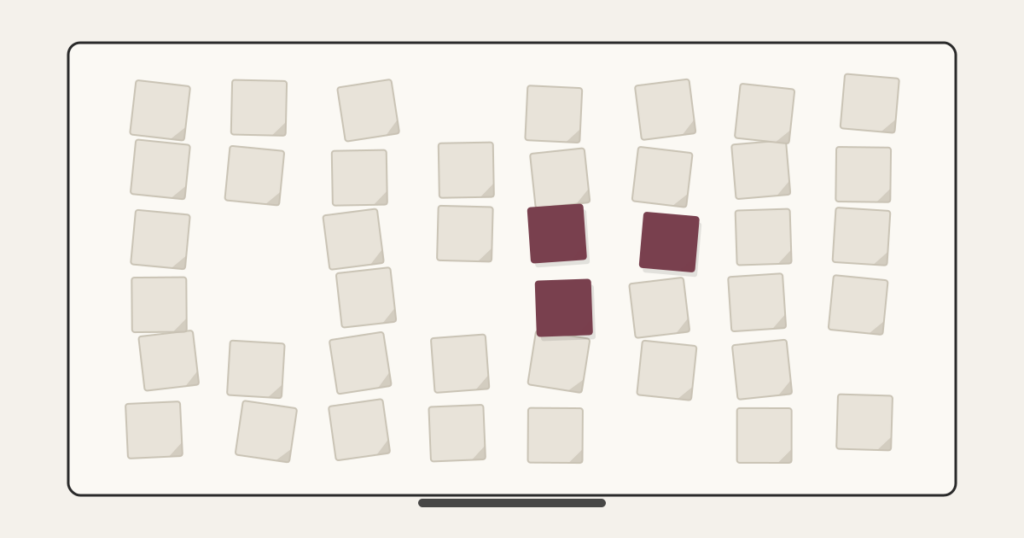
The whiteboard had 41 post-its on it, each one a feature that, according to the founder, “had to be in the MVP”: social login, a dashboard, an admin panel, PDF reports, two languages. We asked a question he wasn’t expecting: if you could only keep three of these post-its, which ones would they be? He froze, not because he had no answer, but because nobody had asked him to choose before. That’s the real problem with almost every minimum viable product. It isn’t size. It’s choice.
A minimum viable product (MVP) is the smallest version of a product that can already test the business’s central bet with real people. The word carrying the weight in that phrase isn’t “minimum”. It’s “viable”. Minimum is easy: cut everything. Viable is hard: it means the stripped-down version still has to prove something you didn’t know before building it. Most MVPs fail exactly there. They get small along the wrong axis.
This guide is for the non-technical founder who is going to pay for that first build and needs to decide its scope without being hostage to anyone’s wishlist. We’ll define the term properly, expose the mistake it hides, and give you a four-question framework for cutting 41 post-its down to the ones that matter.
What a minimum viable product really is
The most-cited definition belongs to Eric Ries, who popularized the term in 2008: the version of a new product that allows a team to collect the maximum amount of validated learning about customers with the least effort. Reread the middle part. The output unit of an MVP is not a product. It’s learning. The product is just the instrument that produces that learning.
In practice, in 2026, the term has become a synonym for “first version built in a hurry”. The two meanings look identical and are not. A first version built in a hurry delivers software. An MVP delivers an answer to a question you couldn’t answer before. You can build both with the same code and the same team. The difference lies in what you decided to test before you started.
Worth clearing one common confusion out of the way for anyone researching the acronym. MVP, in this context, is Minimum Viable Product. It is not the sports or gaming “MVP” (Most Valuable Player), and it has nothing to do with “minimum viable data”, a phrase that floats around in searches but is not a product concept. When an investor or a developer says MVP in a conversation about your business, it always means the minimum viable version of the product.
The mistake almost every MVP makes
We’ve argued in another piece that most MVPs validate nothing: they build something, feel like progress was made, and come out the other side with no new certainty. We won’t repeat the argument here. The operational point, the one that changes your scoping decision, is this: the MVP goes minimal along the wrong dimension.
The founder with the 41 post-its wanted to cut features until the list fit the budget. Logical, but insufficient. Cutting a bad list in half gives you half a bad list. The right question is not “what fits in the timeline”, it’s “what is the one thing this build needs to prove”. Once you answer that first, the scope practically draws itself: everything that doesn’t serve the proof goes, however pretty the post-it.
That’s why so many MVPs end with dozens of signups and zero learning. They tested whether the product could be built. You already knew it could. What you didn’t know, and what the MVP existed to discover, was whether anyone cares enough to pay.
The four questions that define your MVP’s scope
This is the framework we use with founders before writing a line of code. Four questions, in order. Each one cuts the scope in a different way, and together they turn a wishlist into a lean bet.
1. What is the one thing that must be true for the business to exist?
Every business rests on one hypothesis that, if false, brings down everything else. For a services marketplace, it’s that qualified providers show up when there’s demand. For a clinic-management SaaS, it’s that the manager will trade the spreadsheet for software if it solves the painful part of scheduling. Write that sentence down. If you can’t write it, the MVP has no target, and no amount of scope-cutting will fix that.
Most of the features on your list don’t touch that one thing. They make the product more complete, not the bet more testable. On the 41-post-it board, exactly four had any relationship with the central hypothesis. The other 37 were comfort.
2. What is the shortest path to someone paying?
A signup is not validation. A compliment is not validation. The only strong evidence that a business exists is money leaving someone else’s account for yours, or at least a formal commitment that it will. So ask: from where you are today to the first real charge, what is the shortest path? Everything on that path goes into the MVP. Everything off it waits.
This test kills features that look essential. An admin panel is not on the path to payment; you administer by hand at the beginning. PDF reports are not on the path; nobody refuses to pay over a missing PDF in week one. Social login is not on the path; email and password will do. What’s left on the path is usually uncomfortably little, and that discomfort is the sign you got the scope right.
3. What can be done by hand before it becomes code?
A lot of what seems to need software, early on, is people doing work the system will automate later. That has a name: the concierge MVP. You deliver the outcome manually, with a spreadsheet, WhatsApp and human effort, and only build the software once you’ve proven the outcome has value. It’s the advice Paul Graham compresses into doing things that don’t scale: at the start, the manual labor is the strategy, not the shortcut. The classic is the founder who sold the product on a landing page before the product existed, served the first orders personally, and only then wrote code.
For the non-technical founder, this is the most underrated lever. Every workflow you run by hand for a few more weeks is a workflow you don’t pay to build before knowing whether it matters. And you learn things doing manual support that no analytics dashboard will ever tell you. The cost is your time. The return is not burning a development budget that isn’t justified yet.
4. What would you be ashamed to show a paying customer?
This is where “minimum” meets “viable” and the two have to coexist. The right version of an MVP is not the ugliest thing you can ship. It’s the first version you’d be proud to put in front of someone who is going to pay. Those two things are not opposites. The concierge cuts the number of things; the quality bar decides how well the few remaining things are done.
A product can have a single feature and be excellent at it. It can have one screen, and that screen works, loads fast and doesn’t lose data. Minimum is about scope. Viable is about standard. When a founder uses “MVP” as an excuse to ship something broken, he isn’t being lean, he’s sabotaging his own test: the customer who rejects a shoddy product didn’t teach you the idea is bad, he taught you the finish was bad. You spent the shot and measured nothing.
What is an MVP: the famous examples and what they actually teach
Anyone researching “minimum viable product” runs into the same two cases. They’re worth revisiting, because almost everyone draws the wrong lesson from them.
The first is the Dropbox video. Before building file synchronization, which was technically hard, the team recorded a three-minute video showing the product working as if it already existed. The waitlist exploded overnight. The lesson people repeat is “make a video”. The real lesson is that they were minimal on the build and maximal on the bet: they tested the one thing that had to be true, that desire existed, without building the expensive part.
The second is the shoe store that became an e-commerce giant. Before holding any inventory, the founder photographed shoes in physical stores, listed them online and, when someone bought, went to the store, paid full price and shipped. He lost money on every sale. It didn’t matter. He wasn’t testing logistics, he was testing whether people would buy shoes on the internet without trying them on. Pure concierge. The bet came before the system.
Both cases pass the same four-question test. They isolated the central hypothesis, took the shortest path to evidence and did by hand everything that could be done by hand. Neither was a complete product. Both were viable where it counted.
How to build a minimum viable product: the step-by-step
Putting the four questions together, the sequence looks like this, and it holds whether you’re hiring a software house or working with a freelancer.
First, write the central hypothesis in one sentence. If it needs an “and” to make sense, you have two hypotheses; pick the one that kills the business if false. Second, draw the shortest path to payment and list only what’s on that path; that sketch tends to become the natural starting point of a lean requirements document. Third, mark what can be done by hand and pull it out of the build. Fourth, set the quality bar for what’s left, because that’s where “viable” lives. Only then do you estimate timeline and cost, and the number almost always comes out smaller than the original list suggested.
What this process avoids is the most expensive pattern in the market: paying to build a complete product, launching, discovering nobody wants it, and only then looking at scope. The right order is to look at scope first. It’s cheaper to argue over a post-it than to rewrite a system.
Before jumping to the product, it pays to have done the homework of understanding the problem. The MVP answers “does anyone want this”; product discovery answers “what exactly is the this”. The two stages reinforce each other, and skipping the first is usually what leaves a founder staring at a board of 41 post-its with no idea which ones matter.
An MVP is not an excuse for disposable software
There’s a comfortable myth that MVP code is throwaway code, so any duct tape will do. Sometimes that’s true, and when it is, do throw it away. But the more common case is different. The more common case is the MVP that works, attracts the first customers and, for that very reason, becomes the foundation of the real product, with all the rush and all the shortcuts baked in. Then what was supposed to be a cheap test becomes technical debt charging interest for years.
The way out is not building everything perfectly from day one; that contradicts the whole point of an MVP. The way out is being deliberate: lean in scope, honest about what’s disposable and what will become foundation, and demanding about the quality of the few things that remain. Well-built software is not a luxury for people with time. It’s what separates a test that teaches from one that just burns cash. Custom-built, made to fit, even when it’s small.
Frequently asked questions about minimum viable products
What is the minimum viable product of a business?
It’s the smallest version of the product that already tests the company’s central bet with real customers. It is not the cheapest or the fastest version per se; it’s the leanest one that can still prove whether people care enough to pay. Start by defining the one hypothesis that, if false, kills the business, and build only what serves to test it.
What is an MVP, with examples?
MVP stands for minimum viable product. The classic example is Dropbox, which validated demand with a video before building file sync; another is the shoe e-commerce that sold without inventory, buying from physical stores order by order. In both, the team was minimal in what it built and rigorous in what it tested.
How do you build a minimum viable product?
In four steps: write in one sentence the hypothesis that must be true for the business to exist; map the shortest path to someone paying and include only what’s on that path; do by hand everything that can be done without code; and set a quality bar you wouldn’t be ashamed of in front of a paying customer. Estimate cost and timeline only after those cuts.
What is a true MVP?
One that passes the “viable” test: a lean version that still proves something you didn’t know, at a level of quality you’re not ashamed to show a paying customer. A first version built in a hurry delivers software; a true MVP delivers an answer. If the build wasn’t designed to test a specific hypothesis, it isn’t an MVP, it’s just a small product.
What does “minimum viable data” mean?
It is not a standard product concept, and it’s usually a confusion with “minimum viable product”. What does exist and is useful is the idea of collecting the minimum set of evidence that confirms or kills your hypothesis. In product, the correct term is minimum viable product (MVP).
Is this MVP the same as the sports or gaming MVP?
No. In business and software, MVP is Minimum Viable Product. In sports and games, MVP is Most Valuable Player. Same initials, unrelated concepts; when the conversation is about your product, it always means the minimum viable version.