


What is a sprint? A non-technical founder’s guide
A sprint is your project’s clock. Understand how it works and you control the build without becoming a tech manager. Miss it, and you find out too late that you paid for two weeks that produced nothing.
A founder we know sent a message on a Saturday night, three weeks into a project: “the team says they’ll deliver next sprint, but nobody explained what that means and I’ve already spent half the budget.” He wasn’t slow. He was an ex-consultant who could read a balance sheet. Nobody had just translated “sprint” into the language that mattered to him: money and control.
A sprint is a short, fixed cycle of work, usually two weeks, in which a development team commits to delivering a working piece of your software. At the end of the sprint, something runs, you test it, and the team starts the next cycle. It’s the basic unit of time in modern software development and the heart of the Scrum framework. That’s the dictionary definition. The useful part, the one nobody writes for the person paying the bill, comes now.
A sprint isn’t a technical ritual. It’s your control point.
Almost every article about sprints was written for the people inside: the scrum master, the developers, whoever runs the daily. They explain ritual. You don’t need ritual. You need to know one thing: the sprint is the shortest interval in which you can answer the question “did the money that went in turn into software that works?”
Outside software, you already operate this way. A restaurant closes out the register every night. A sales team reviews the pipeline every week. The sprint is the register close for your build. Every two weeks, the project stops being a promise and becomes something you can open in a browser and test. Without that stopping point, development turns into a three-month black box where you sign checks and pray.
That’s why the length is fixed and short. If a sprint ran three months, you’d discover a direction problem too late to fix it cheaply. With two weeks, the worst case is you lose two weeks. Expensive, but recoverable. The sprint turns one big opaque risk into a series of small visible ones.
How long a sprint lasts (and why it’s almost always two weeks)
Scrum allows sprints of one to four weeks. In practice, the market standard for early-stage products is two weeks, and there’s an operating reason behind it.
One week is too short: half the time goes to planning and review, leaving little room to build. Four weeks is too long: you lose visibility again, and a wrong turn costs a month. Two weeks is the point where the team has enough time to ship something real and you have enough frequency to stay in control.
If a vendor proposes four-week sprints or, worse, “we don’t work in sprints, we deliver everything at the end,” treat it as a signal. It isn’t necessarily fraud. But it’s less visibility for you, and visibility is exactly what you’re buying when you outsource a build without a CTO watching over it.
What happens inside a sprint, from your seat
A sprint has four moments. The technical literature treats all four as team rituals. Here’s what each one means for you, the person paying.
Sprint planning (the start). The team decides what to build over the next two weeks, pulling items from the backlog, the prioritized list of everything the product needs. Your role here is short and decisive: make sure what enters the sprint is what matters most to the business right now, not what’s most fun to code. You don’t decide how. You defend the what.
The daily (the middle). A short, daily conversation where the team syncs. You almost never need to be in it. If a vendor demands you attend the daily every day, something is wrong: either they can’t organize themselves, or they’re trying to turn you into the project manager you hired precisely so you wouldn’t have to be.
Sprint review (the end, and the part you don’t skip). On the last day, the team shows you what they built, working. Not slides. Not “it’s 80% done.” Software running. This is the most important meeting of your month. It’s where you check whether the money became product, test it with your own hands, and say what’s good and what came back wrong. If you can only join one thing in the whole project, join the review.
Retrospective (engine maintenance). The team talks about how to improve its own process. It’s internal. You don’t need to be there, but it’s worth asking, now and then, what came out of it. A team that never changes anything in the retrospective is a team that isn’t learning.
How the sprint protects your budget
Here’s the real reason you should care about this. The sprint is the best defense there is against the two most common ways a software project burns money: scope creep and a build that drifts away from the business.
Because a sprint has fixed scope, it creates a boundary. That brilliant idea you had on Wednesday doesn’t barge into the middle of the current sprint and scramble what was agreed. It goes to the backlog and enters the next sprint, when you and the team reassess priorities with a cool head. The sprint boundary is what keeps every flash of inspiration from becoming an emergency for the team and a bigger bill for you.
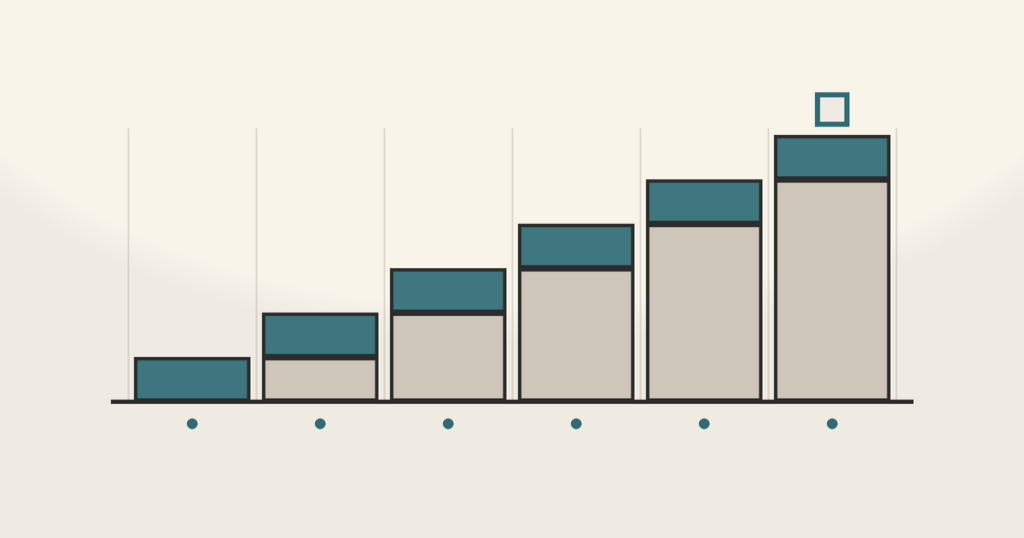
And because every sprint ends in working software, you’re never more than two weeks away from the truth. A three-month project without sprints can be 100% wrong on day 89 and you only find out on day 90. With sprints, you get six correction points along the way. Each review is a chance to say “that’s not it” while changing course is still cheap.
A practical way to use this: at the end of each sprint, do the back-of-the-envelope math. You paid X for two weeks. Is the real business value that landed in those two weeks worth X? It doesn’t have to be exact. After three or four sprints, you’ll feel whether the pace is fair or whether you’re paying a lot for a little. That instinct, recalibrated every two weeks, is worth more than any report.
Sprint, Scrum, and design sprint are not the same thing
Three similar words that confuse everyone, so it’s worth separating them fast.
Scrum is the whole framework: roles, ceremonies, artifacts. The sprint is one part of Scrum, the time cycle. It’s the difference between “soccer” and “playing time.” You don’t need to master Scrum. You need to understand the sprint.
Design sprint is a different thing: a five-day process created at Google to test an idea quickly, before building. Despite the name, it has little to do with the development sprint. If someone offers you a “design sprint,” they mean validating a concept in a week, not building software in cycles.
And no, the software sprint has nothing to do with the running race. The word was borrowed from athletics for the idea of a short, concentrated effort. That’s all.
The mistake non-technical founders make with sprints
The most common one isn’t ignoring the sprint. It’s using it backwards. The founder gets that there’s a cycle, so they treat every sprint as a delivery promise and lean on the team like an assembly line: “why wasn’t this feature done this sprint?”
The problem is that a sprint isn’t a delivery guarantee. It’s a commitment to try within a fixed time-box. Sometimes the team discovers mid-sprint that the task was more complex than it looked. A sprint that ends with “this is harder than we thought, here’s what we learned” is not a failed sprint. It’s the sprint doing its job: giving you the bad news in two weeks instead of two months.
The right question at the review is never “why isn’t it done.” It’s “what did we learn, and what does that change for the next sprint.” A founder who treats the sprint like a factory line breaks the team’s trust and, ironically, slows the project down. The cycle works when you use it as an instrument of vision, not as a whip.
If you’re building your product’s logic from scratch, the sprint is the ticking clock that keeps the roadmap connected to reality. The roadmap says where. The sprint delivers the next two steps and shows you whether the ground is what you imagined.
Frequently asked questions
What is a sprint, in one sentence?
A fixed cycle of work, usually two weeks, in which a development team delivers a working piece of software you can test at the end.
What’s the difference between a sprint and a backlog?
The backlog is the full, prioritized list of everything the product needs. The sprint is the slice of that list the team commits to building now. The backlog is the menu; the sprint is what you ordered this round. We break the backlog down in this guide.
How many sprints does it take to build a product?
It depends on scope, but a serious first product usually takes 4 to 10 sprints, meaning two to five months. Be suspicious of anyone who promises “one sprint” for something you’d take months just to describe.
Do I need to attend every sprint meeting?
No. You need to be at the sprint review, at the end of each cycle, and to be heard at planning. The daily belongs to the team. A vendor who demands your presence every day is probably poorly organized.
What is a sprint in Scrum?
It’s exactly the same thing. “Sprint in Scrum” just makes explicit that the cycle is part of the Scrum framework, where it was born. There’s no separate kind of sprint inside Scrum.
Does a sprint have anything to do with a running race?
Only in the name. The word was borrowed from athletics for the image of a short, intense effort. In software, it describes the work cycle, not a race.
The sprint is the simplest instrument you have for turning an outsourced build into something you control without understanding code. Two weeks, one delivery that runs, one honest question: was it worth it? Ask that question six times in a row and you’ll have run an entire software project without ever opening a code editor.