


What is a tech stack? A non-technical founder’s guide
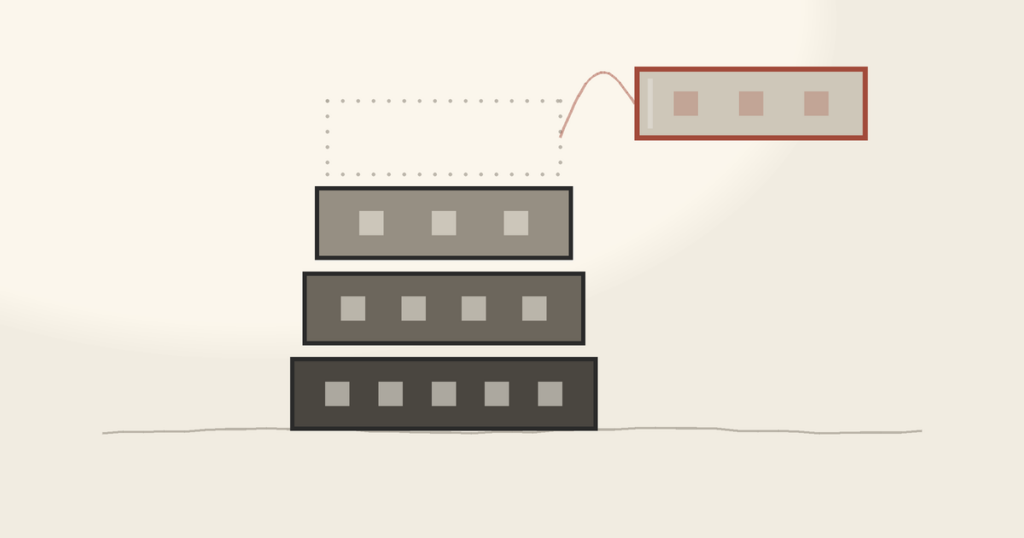
A non-technical founder’s guide to the tech stack: not how to pick one, but how to tell a good stack decision from a bad one, which choices are expensive to reverse, and the questions to ask whoever builds your product.
The first time most founders hear the words “tech stack” said with weight behind them is in a room they can’t fully read. For Priya, it was a Series A diligence call. The partner across the table, friendly until that moment, asked what her stack was. She knew her product. She knew her numbers cold. She did not know whether “Rails and Postgres on AWS” was the right answer or a confession, and the half-second of silence told everyone in the room which.
A tech stack is the set of technologies your software is built on: the programming languages, frameworks, databases, and infrastructure that, stacked together, run your product. That’s the whole definition. A “what is a tech stack” question almost never wants more than that, and the layered diagrams that fill the search results make it sound more mysterious than it is. The harder question, the one nobody writing about tech stacks seems to answer, is the one Priya actually had: you didn’t choose your stack, you can’t read the code that sits on it, so how are you supposed to know whether yours is any good?
This is the guide we wish that founder had before the call. It won’t teach you to pick a stack. As a non-technical founder, you shouldn’t be picking one, the same way you shouldn’t be writing the SQL. It will teach you to evaluate the one you’ve been handed, to know which parts are expensive to get wrong, and to ask the four questions that separate a stack chosen for your business from a stack chosen for someone’s résumé.
What a tech stack actually is, in plain language
Picture your product as a building. The tech stack is everything structural plus everything you furnished it with. People usually describe it in layers, and the layers map cleanly onto things you already understand as an operator.
The frontend is what your users see and touch: the screens, the buttons, the app on the phone. When someone says “React” or “Swift,” they’re naming the tools used to build that surface. The backend is the part users never see: the logic that decides what happens when they click, who’s allowed to do what, how an order becomes a charge. The database is where everything your business knows is stored, your customers, their transactions, their history. The infrastructure is the ground it all stands on: the servers, usually rented from Amazon, Google, or Microsoft, that keep the thing online at 3 a.m.
A concrete example, because “what is a tech stack” is best answered with one. A typical early-stage SaaS product might run React on the frontend, a Node or Ruby backend, a Postgres database, hosted on AWS, with Stripe wired in for payments and a few other services bolted on for email and analytics. That sentence is a complete tech stack. If your developer can’t describe yours in a sentence that plain, that’s worth noticing, and we’ll come back to why.
The thing to hold onto: each layer is a business decision wearing technical clothes. The database isn’t just where data lives; it’s how fast you can answer a customer’s question and how painful it’ll be to move that data in three years. The infrastructure isn’t just servers; it’s a monthly bill that scales with your growth. None of this requires you to code. It requires you to translate.
You won’t pick your stack. You still have to be able to read it.
There’s a trap on both sides of this. One founder treats the stack as none of their business, hands it entirely to a developer, and finds out two years later that a single contractor is the only person alive who understands how the company runs. The other founder reads three blog posts, develops opinions about whether the team should use MongoDB, and starts overriding the people they hired to make exactly that call. Both are mistakes. The job isn’t to choose the stack or to defer on it completely. The job is to be able to read it.
Reading it means three things. You can describe your stack in plain language to an investor or a new hire. You know which choices in it are reversible and which are close to permanent. And you can tell when a technical decision is being made for a technical reason versus when it’s being made for a personal one. That last skill is the whole game, and most founders never develop it because nobody tells them it’s a thing they’re allowed to evaluate.
This is also where the stack connects to a decision you may have already faced: whether to build something custom or buy it off the shelf. Every “build” answer commits you to a stack. Knowing how to read that stack is the difference between a build decision you own and one that owns you.
The decisions that are cheap to change, and the ones that aren’t
Not every choice in your stack carries the same weight, and the single most useful thing a non-technical founder can learn is to tell the heavy ones from the light ones.
Some decisions are reversible. The tool you use for analytics, the service that sends your transactional email, the library that draws your charts, these can be swapped in an afternoon, or at least in a sprint, without anyone losing sleep. If your team picked one and it turns out to be wrong, the cost of being wrong is small. You can afford to let those decisions be made quickly and changed later.
Other decisions are load-bearing. Your primary programming language, your database, the basic shape of how your system is organized, these are poured like a foundation. Changing them later isn’t a swap; it’s a rebuild. A company that decides at thirty engineers to move off its original language is looking at a project measured in quarters and burning real money, the kind of rebuild nobody wanted. The platform question of whether you go native or cross-platform on mobile sits in this heavier category too: it’s reversible in theory and expensive in practice.
You don’t need to know which database is best. You need to know that the database is a load-bearing decision and the email provider isn’t, so you know where to slow down and ask questions and where to let your team move fast. When a developer says “we can change that later,” your only job is to ask one thing: is this actually a later-changeable decision, or are you telling me it is because it’s already made? Good builders will tell you the truth. The reversible-versus-load-bearing distinction is the founder’s version of structural engineering. You’re not pouring the concrete. You’re making sure someone checked which walls hold the roof up.
The four-question read: how to evaluate a stack you can’t code
Here’s the script. When someone proposes a stack, or when you inherit one and want to know what you’re standing on, ask these four questions and listen less to the answers than to how they’re given.
1. “Why this and not the boring, obvious choice?” There’s almost always a default for any given job, the option most teams reach for because it’s well understood. If your developer chose the default, they should be able to say so plainly. If they chose something else, there should be a reason that ties to your business, not to the technology being interesting. “We used Postgres because it’s the boring right answer” is a great answer. “We used a graph database because it’s a better fit for how this data is actually shaped” is a great answer. “We used it because I wanted to learn it” is the answer you’re listening for, and it should make you sit up.
2. “How many people can work in this if you get hit by a bus?” Phrase it more gently if you like, but the question is real. A stack built on popular, widely used technology means you can hire your next three developers from a pool of thousands. A stack built on something exotic means your talent pool is a group chat. You’re not just buying software when you approve a stack; you’re buying your future ability to staff it.
3. “What happens to this bill as we grow?” Some stacks are cheap at ten users and brutal at ten thousand. Ask your team to walk you through what the infrastructure costs now and what it looks like at ten times your current load. You won’t be able to check the math, but you’ll learn whether they’ve thought about it. A team that has never modeled this is a team that’s going to surprise you with an invoice.
4. “Show me the part you’re least proud of.” The honest answer to this tells you more than a polished architecture diagram ever will. Every real system has a corner that’s held together with tape, a shortcut taken under deadline, a known piece of technical debt. A team that can point to theirs and explain the trade-off is a team that’s honest with you. A team that claims everything is clean is either lying or doesn’t know, and you can’t tell which, which is its own problem.
You’ll notice none of these four questions require you to understand the answer technically. They require you to read the person answering. That’s the actual skill, and it’s one founders from finance and consulting backgrounds already have. You’ve evaluated people you couldn’t out-expert before. This is the same muscle. It’s also the same muscle you use when you choose a software development company in the first place: you’re judging judgment, not code.
The red flags: when a stack was chosen for the engineer, not the business
There’s a failure mode in software that has a name among developers: résumé-driven development. It’s when technology gets chosen not because it’s right for the problem but because it looks good on the person’s CV or because it’s the framework everyone was talking about at the last conference. It is one of the most common and most expensive mistakes in early-stage software, and a non-technical founder is uniquely vulnerable to it because they can’t see it happening.
The tells are knowable, though. Be wary when the stack is full of technologies that are very new, where the case for them is excitement rather than fit. Be wary when no two parts of the system use the same approach, a sign that whoever built it was collecting tools rather than solving a problem. Be wary, above all, when you ask why something was chosen and the answer drifts toward how modern it is, how cutting it is, how it’s the future. The future is not a reason. A fit to your actual problem is a reason.
The deeper issue is that a trend-chosen stack quietly transfers risk onto you. The engineer gets the learning and the line on their résumé. You get a system that’s hard to hire for, hard to maintain, and built on something that may be abandoned in two years. We’ve seen founders inherit codebases written in frameworks that were fashionable for eighteen months and unsupported by the time the company needed to scale. The bill for that fashion lands on the founder, never the person who chose it. A stack should be boring in the same way good plumbing is boring. You want it to work, not to impress your friends.
Why boring usually wins
The most popular tech stacks are popular for an unglamorous reason: enough people use them that the problems are solved, the documentation is thick, and the talent pool is deep. When you build on widely adopted technology, you are standing on the accumulated debugging of millions of other developers. When you build on the exotic thing, you are debugging it yourself, alone, at the worst possible moment.
You don’t have to take this on faith. The Stack Overflow Developer Survey asks tens of thousands of working developers every year what they actually use, and the answers are a usable map of what’s well-supported and easy to hire for. The boring, dominant choices on that list are dominant because they keep working. For an early-stage company, “popular and well-understood” beats “novel and impressive” almost every time, because your constraint is rarely the technology itself. Your constraint is your ability to hire people to work on it, fix it fast when it breaks, and not be held hostage by the one person who understands the clever part.
This is the same instinct Pixel Breeders brings to every build. Custom-built doesn’t mean exotic. It means the system is shaped to your business, made to fit and made to scale, on a foundation that other people can stand on after you. The craft is in the fit, not in the novelty of the parts. A stack you can hire for, explain in a sentence, and hand to the next person without ceremony is not a compromise. It’s the goal.
Priya, for what it’s worth, had a fine stack. Rails and Postgres on AWS is the boring right answer for a company at her stage, and the partner’s question wasn’t a trap, it was a check for exactly the self-awareness she’s now built. The next time someone asks what her stack is, the half-second of silence is gone. Not because she learned to code. Because she learned to read.
FAQ
What is a tech stack?
A tech stack is the set of technologies your software runs on: the programming languages, frameworks, database, and infrastructure that combine to make your product work. A common example is React on the frontend, a backend language like Ruby or Node, a Postgres database, hosted on AWS. As a founder, you don’t need to choose it, but you should be able to describe yours in one plain sentence.
What is a tech stack example?
A typical early-stage SaaS stack: React for the user interface, a Node.js or Ruby on Rails backend for the logic, PostgreSQL as the database, hosted on Amazon Web Services, with Stripe handling payments. Each piece does one job, and together they are the company’s tech stack. If your team can’t summarize yours this simply, ask why.
What is the most popular tech stack?
There’s no single winner, but the most widely used pieces tend to cluster around a few well-supported options: JavaScript and TypeScript on the frontend, languages like Python, Ruby, Node, or Java on the backend, PostgreSQL or MySQL for data, and AWS, Google Cloud, or Azure for hosting. Popularity matters because it means more documentation, more solved problems, and a deeper pool of people you can hire.
What is a good tech stack for a startup?
A good startup stack is boring on purpose: built on popular, well-documented technology you can hire for, with no exotic choices unless there’s a clear business reason. The best stack for an early-stage company is the one that lets you ship, change cheaply where you can, and staff easily, not the one that’s newest or most impressive.
Should a non-technical founder choose the tech stack?
No. Choosing the stack is your developer or technical partner’s job. Your job is to evaluate the choice: to know which decisions are expensive to reverse, to ask why each major piece was chosen, and to make sure the stack was selected for your business rather than for someone’s résumé. You judge the judgment, not the code.
How do I know if my tech stack is outdated?
The signals are practical, not technical: it’s getting hard to hire people who know it, your team avoids touching certain parts, the original builder is the only one who understands it, or the underlying technology is no longer actively supported. An aging stack rarely fails loudly. It just gets slower and more expensive to change until a rebuild becomes unavoidable.