


Frontend and backend: the non-technical founder’s guide
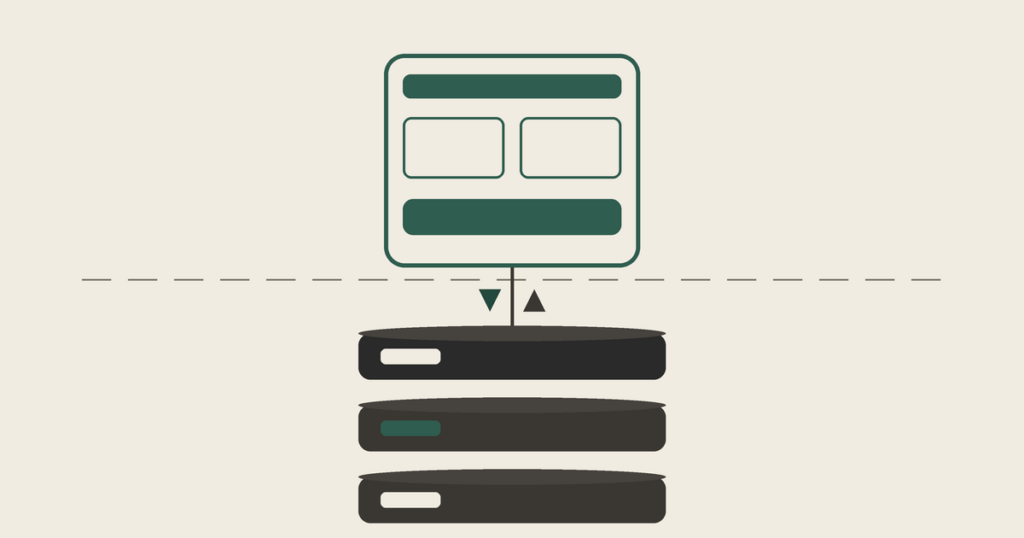
A practical map of the difference between frontend and backend for the founder who pays for the build, has to read an estimate, and needs to know who to call when something breaks, without writing a line of code.
Three weeks into a project, a founder we work with joined a call with the dev team over a simple problem: the “complete purchase” button was disappearing on some customers’ phones. Someone on the team said “that’s frontend” and someone else answered “no, the cart is coming back empty from the API, it’s backend.” The founder wrote down both words, nodded, and had no idea which one explained the money he was losing that morning.
Frontend and backend are the two halves of any piece of software. The frontend is the part your customer sees and touches: the screen, the buttons, the form, the layout on a phone. The backend is the part nobody sees: the server that stores the data, processes the payment, enforces the business rules, and answers when the frontend asks for something. You are not going to code either one. But if you can’t tell them apart, you’ll brief badly, read estimates in the dark, and burn days figuring out who should fix a ten-minute problem.
What frontend and backend actually are, in plain English
Picture a restaurant. The frontend is the dining room: the tables, the menu, the waiter, everything the guest experiences. The backend is the kitchen and the storeroom: where the food gets made, where the ingredients are kept, where the rules (“we’re out of salmon”) actually live. The guest only sees the dining room. But a plate that arrives wrong could have been ordered wrong in the dining room or cooked wrong in the kitchen, and the owner has to tell the two apart to avoid blaming the wrong person.
Software is the same. The frontend runs on your customer’s device, in the browser or the app. Its job is to show things and capture what the person types or taps. The backend runs on a server you rent in the cloud. Its job is to store, calculate, decide, and protect. Between them flows the information: the frontend asks (“this customer wants to complete the purchase”), the backend answers (“purchase recorded, charge made, inventory reduced”).
The split matters because the two halves carry different costs, different risks, and different people. Treating “the software” as one undivided thing is what makes a founder accept an estimate they can’t read and describe a bug in a way nobody can act on.
Why you, who won’t code, need to know the difference
The goal here isn’t for you to learn to code. It’s for you to do four things a non-technical founder does every week and almost always does badly.
The first is to describe a problem. “The app has a bug” helps no one. “The complete button disappears on mobile” points at the frontend. “One customer got charged twice” points at the backend. The second is to read an estimate and understand why a simple-looking screen sometimes costs more than a complex one. The third is to know who to hire and when. The fourth is to understand which changes are cheap and which are expensive and risk breaking things that already worked.
None of those four requires code. All of them require the map. It’s the same reason you don’t need to cook to run a restaurant, but you do need to tell a dining-room problem from a kitchen problem.
When something breaks: is it front or back?
This is the question you’ll ask most, so it’s worth a simple method. Ask: is the problem about how the thing looks or about what the thing does?
If it’s appearance or behavior on the screen, it’s probably frontend. Text cut off on an iPhone, a button that won’t click, a menu sitting on top of the content, a page that’s slow to draw. Those are problems with what the customer sees.
If it’s data, money, a rule, or something that happens “underneath,” it’s probably backend. A customer charged wrong, a report showing a number that doesn’t add up, the confirmation email that never arrived, two users with the same login. Those are problems with what the system does when nobody’s watching.
There’s a gray zone, and it’s an honest one: sometimes the screen shows the wrong thing because the backend sent the wrong data. The empty cart from the top of this piece looked like frontend (the cart shows empty) but was backend (the API was sending the cart without its items). It’s fine not to get it right the first time. The win is being able to say “looks like front, but check whether the data arriving is already wrong,” instead of just firing off a screenshot with the word “urgent.” When your team needs context to move fast, an honest code audit usually reveals where that boundary is messiest.
Where the estimate’s money goes
When you get an estimate, it’s almost always split (or should be) between frontend work and backend work. Reading that changes the conversation.
A screen that looks simple can be expensive because the real work sits behind it. A “simple” search box that has to look through a hundred thousand products, rank them by relevance, and answer in under a second is almost all backend. What the customer sees is a little text field. What costs money is the machine behind it.
The reverse happens too. A screen that looks rich, with drag-and-drop, animation, and live editing, can be expensive on the frontend even if the backend only has to save the result at the end. The point isn’t to memorize which half costs more. It’s to know how to ask: “is this line frontend or backend, and why?” A vendor who can’t answer that clearly is selling you a black box, and how much an app costs becomes a number with no story. A good partner shows the bill; a bad one asks for your trust.
What’s cheap to change and what’s expensive
Not every change weighs the same, and the frontend/backend split is the best shortcut for guessing the weight before you ask.
Frontend changes tend to be cheaper and less risky. Changing a button’s color, reorganizing a form, editing a text, adjusting the mobile layout. You see the result immediately, and if it looks bad you undo it without drama. That’s why “let me see how it looks” works well on the frontend.
Backend changes tend to be more expensive and riskier, because they touch data and rules that other things depend on. Changing how a price is calculated, how customer data is stored, how two systems talk to each other. A mistake here doesn’t make a button ugly; it charges the wrong customer or loses information. It’s the kind of change that demands care, testing, and sometimes migrating old data. When someone promises you a “quick” backend change, it’s worth questioning the “quick” before you accept the deadline. A lot of what we call system integration lives in exactly this expensive half.
Full stack, two specialists, or a team?
Here comes the practical hiring question, and the word you’ll hear: full stack. A full-stack developer is someone who works on both halves, frontend and backend. It’s not a superhuman; it’s a professional who moves between the two instead of specializing in one.
Early on, with a first version you can put in front of a paying customer, a good full-stack developer (or a partner who already has both sides) almost always beats two separate specialists. Fewer people to coordinate, less “that’s not my area,” one head holding the whole problem. Specialization makes sense later, when the product grows and each half gets complex enough to justify a dedicated person, or when you have volume that breaks whatever came off the shelf.
The common mistake is hiring as if you were a big company before you are one. Two senior engineers, one per side, on a product that has no shape yet, is expensive and slow. If you’re deciding between building an internal team and working with a partner, the frontend/backend split helps here too: a partner delivers both halves already coordinated, while hiring means landing two hard hires before you even know what the product needs. It’s worth reading the tech stack under each side before deciding who does what.
Signs the split was made for the engineer, not the business
Sometimes the problem isn’t that you don’t understand the split. It’s that the split was made to please whoever codes, not to serve your business. A few warning signs:
The frontend is gorgeous and the backend is a hack. Polished screens on top of data nobody trusts is the equivalent of an award-winning dining room serving food from the wrong kitchen. It impresses in the demo and fails in real use.
The opposite counts too: a “rocket-ship” backend for a product that doesn’t have ten customers yet. Too much engineering in the invisible half is usually the team having fun, not the business moving forward.
And the worst one: nobody can explain where one half ends and the other begins. When the team treats the boundary as a mystery, it’s usually because the boundary is messy, and messy code at the boundary is where bugs hide for months. A real tech partner isn’t a black box; they show you the map without being asked.
Frequently asked questions
What’s the difference between frontend and backend, in one sentence?
Frontend is the half the customer sees and touches (screens, buttons, layout); backend is the invisible half that stores the data, enforces the rules, and answers the frontend. One handles appearance and behavior on the screen; the other handles what the system does underneath.
When something breaks, how do I know if it’s front or back?
Ask whether the problem is about how the thing looks (likely frontend) or about what the thing does with data, money, and rules (likely backend). If the screen shows something wrong, check whether the arriving data is already wrong, because then the source is backend even though it looks like frontend.
Do I need to hire two people or one full-stack developer?
Early on, a good full-stack developer or a partner that covers both sides usually beats two specialists: less coordination, one head on the whole problem. Specializing each half makes sense once the product grows and each side gets complex enough to justify a dedicated person.
And the database, is it frontend or backend?
Backend. The database is where your business’s information is stored, and it lives in the invisible half. The frontend never talks to the database directly; it asks the backend, which queries the database and answers.
What is “backend for frontend” (BFF)?
It’s a technical pattern where you build a lean backend tailored to a specific frontend (say, one for the app and another for the website). It’s an architecture detail for your team; as a founder, you don’t need to decide it, only to know the term exists.
Who earns more, frontend or backend?
That’s the question for someone choosing a career, not for someone paying for the build. What matters to you isn’t which professional costs more on the market, but where your project’s work actually sits: sometimes on the screen, sometimes on the server, almost always on both.
The split between frontend and backend isn’t technical trivia. It’s the map that decides whether you brief with precision or in the dark, read an estimate or accept it on faith, and call the right person in ten minutes or lose three days. You don’t need to cook. You need to tell a dining-room problem from a kitchen problem, and insist that whoever builds for you can show you both. For a neutral, canonical reference on the client/server split, see the Mozilla documentation.