


Offshore vs nearshore: a non-technical founder’s guide to picking where to build
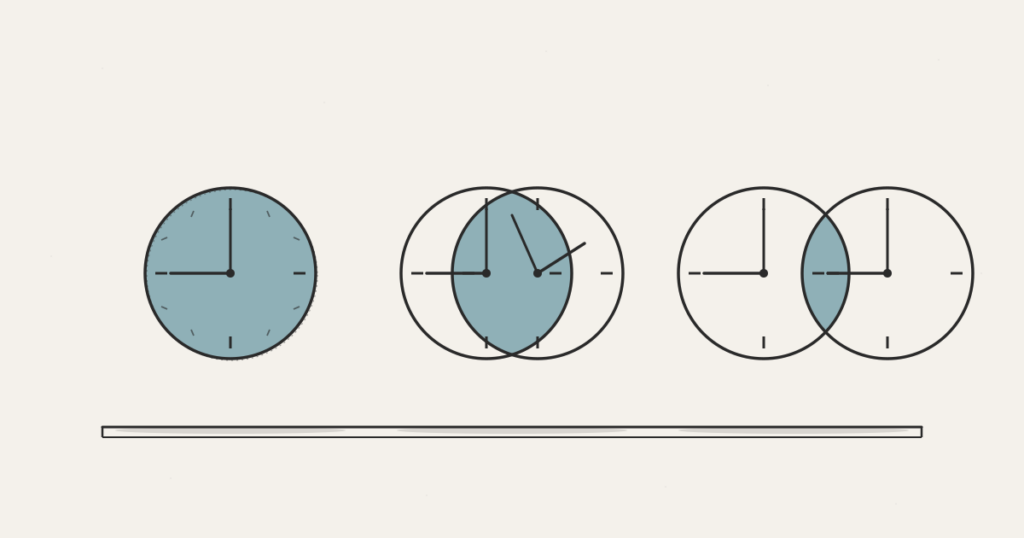
Most articles on this topic are vendor pitches dressed up as guides. This one starts from a different premise: the choice is about how much communication tax you can absorb before you become the engineering manager you said you’d never become.
The first time a founder I work with asked me “offshore or nearshore?”, he framed it as a budget decision. He’d been quoted $90/hour by a small studio in São Paulo and $35/hour by a team in Ho Chi Minh City. The math, he said, was obvious.
Six months later he’d burned through both engagements. The Vietnamese team shipped on spec but couldn’t keep up with the product changes he made every two weeks; messages took 14 hours to round-trip, and a single missed detail in a Notion page became a sprint of wrong work. The Brazilian team understood his product immediately, but he’d hired the wrong shop and the senior was rotated off after week three. He came back to the original question feeling like he’d answered it backwards.
That’s the pattern. Offshore vs nearshore looks like a geography decision and a cost decision. It is, underneath, a decision about how much overhead you can carry as a non-technical founder while still running the rest of the company. If you get that wrong, the cheap option costs more.
Offshore vs nearshore, defined for a founder
Offshore means hiring a software team in a country with a significant timezone gap from yours, typically more than 6 hours of difference and a different continent. From the US, classic offshore destinations are India, Vietnam, the Philippines, Ukraine, and parts of Eastern Europe.
Nearshore means hiring a software team in a country with a small or zero timezone gap, usually on the same continent or within a few hours of overlap during your working day. From the US, the classic nearshore destinations are Mexico, Brazil, Argentina, Colombia, and Costa Rica.
Onshore (the third option, missing from most articles) means hiring a team in your own country. Yes, it’s more expensive per hour. No, that isn’t always the wrong choice.
The names describe physical distance. What you’re actually buying with each is a different bundle of timezone overlap, language register, hourly rate, and the management overhead you have to absorb personally. Those four axes are the real decision.
The 4 types of outsourcing (and why three of them are the wrong fight)
Most “4 types of outsourcing” lists you’ll find online split the world into onshore, nearshore, offshore, and “hybrid.” Or they go a different way and split it into staff augmentation, project-based, dedicated team, and BPO. Both classifications exist; neither helps you decide.
The useful split is by what work you’re actually outsourcing:
- Routine work: bookkeeping, customer support tickets, content moderation. Geography barely matters. Pick the cheapest competent option.
- Build work with a clear, stable spec: implementing a defined backend API, building a mobile screen against a finished Figma. Offshore is fine here; the timezone gap costs you almost nothing because you’re not changing the brief every week.
- Build work that’s still being shaped by you: early-stage product, anything pre-PMF, anything where the brief changes mid-sprint. This is where most non-technical founders are. Nearshore or onshore wins here every time, regardless of hourly rate.
- Strategic technical leadership: architecture decisions, hiring plans, technical due diligence prep. This is rarely outsourced well to either offshore or nearshore as a commodity. It needs a person who’s accountable, accessible, and senior enough to push back on you.
Read your situation, then read the table above. If you’re a non-technical founder with a product that’s still moving, you’re in category 3, and the geography question collapses.
What you’re actually trading
The four axes you care about, in priority order for a non-technical founder:
1. Timezone overlap
The number that matters is hours of overlap between your normal working window and theirs. Not the gap. The overlap.
- US East Coast to São Paulo: full overlap, no friction. Same business day.
- US East Coast to Buenos Aires or Bogotá: full overlap.
- US East Coast to Mexico City: full overlap.
- US East Coast to Lisbon or Madrid: 4–5 hours of overlap. Morning calls; afternoon is theirs alone.
- US East Coast to Kraków or Bucharest: 2–4 hours of overlap. Painful but workable.
- US East Coast to Bangalore: roughly 30 minutes if you’re both willing to stretch. Practically zero.
The math people forget: at 0–2 hours of overlap, every decision takes a calendar day. A clarification you’d resolve in 90 seconds with a coworker becomes a 24-hour delay. Across a 12-week build, that adds up to roughly 4 weeks of pure waiting time that nobody bills you for but you absorb anyway.
If your product is still moving (and if you’re pre-Series A it almost certainly is), that 4 weeks is the difference between launching and not launching.
2. Communication tax
Distinct from timezone, this is the cost of every misunderstood requirement, every meeting you have to have because nobody on the team is around for the async one, every architectural choice made without you because they couldn’t wait for an answer.
You can’t see this on a price quote. You see it three months in, when you realize you’ve been on Slack with the lead developer at 11 p.m. four nights this week. That’s the tax. It scales with the timezone gap, the language register gap, and the founder’s ability to spec work in writing.
Founders without a technical background pay this tax at a worse rate than founders who can write a technical brief. If you can’t write a tight spec, every hour of timezone gap multiplies into more wasted work. The fix isn’t “get better at writing specs in three weeks.” The fix is to buy more overlap until your specs catch up to your team.
3. Hourly rate
For US clients, very rough market rates in 2026 for a senior backend or full-stack engineer with the studio’s overhead included:
- Offshore (Vietnam, India, Philippines, Pakistan): $25–50/hour.
- Offshore (Eastern Europe, including Ukraine, Romania, Bulgaria): $40–70/hour.
- Nearshore (Brazil, Argentina, Mexico, Colombia): $60–110/hour for serious shops; $35–60/hour for smaller studios.
- Onshore (US): $120–200/hour for serious shops; freelancers vary.
These numbers move every quarter, and the senior/junior spread inside each region is wider than the spread between regions. A bad senior in Argentina costs more, all-in, than a great senior in Romania. Treat these as orientation, not as quotes.
The number that matters isn’t the hourly rate. It’s the rate multiplied by the actual hours required to ship, plus your founder time absorbed managing the team. A $35/hour engagement that needs you in Slack three hours a night is more expensive than a $90/hour engagement that needs you in a 30-minute weekly call.
4. Quality variance
Within any region, the spread between the best studio and the median studio is enormous, bigger than the spread across regions. There are excellent engineering teams in Hyderabad and there are pretty average ones in Buenos Aires. Vendor selection is a separate problem from geography and most founders conflate them.
If you’ve never bought custom software before, the highest-impact move you can make is to spend more time on vendor selection than on geography. We’ve written about how to evaluate a software development partner and what to look for when you hire a senior developer. Both are the prerequisites this article assumes.
Why offshoring is controversial
You’ll see two strains of pushback against offshore in particular: political and operational.
The political pushback (that hiring abroad takes jobs from local engineers) is older than this article and isn’t going away. Some of your customers, investors, or board members will have a view on it. Worth knowing where they land before you make announcements about your team. We’re not going to wade into that fight here; it’s a separate conversation.
The operational pushback is the one that should change your decision. Founders who’ve been burned by offshore engagements describe the same pattern: a great pitch, a strong first month, then quality drops as the studio rotates their best people onto a different client and gives you their B team. The contract has no protection against this and you don’t know it’s happening until your throughput halves. This isn’t unique to offshore (nearshore shops do it too), but the longer the feedback loop, the longer it takes you to catch.
That’s the real argument against offshore for an early-stage founder. Not the politics, not the accent. The feedback loop. If you can’t see a problem until it’s been compounding for three weeks, you can’t course-correct in time.
The rule of thumb
If your product is still moving and you’re the only person who can answer hard questions about it, buy timezone overlap before you buy hourly rate.
That’s the rule. It’s not subtle and it’s not new. Founders rediscover it the hard way every quarter.
The operational version of the rule:
- If you can write a spec your team won’t have to ask 20 questions about: offshore is on the table.
- If you can’t, but you can be on calls all day: onshore is on the table.
- If you can do neither: nearshore is your only safe option.
Most non-technical founders pre-PMF are in the third bucket. That’s why nearshore wins the founder-segment of this market even though offshore is cheaper on paper.
When offshore is actually the right call
Three cases where the math swings the other way:
-
You have a real CTO or technical co-founder who can carry the spec discipline. They can absorb the communication tax that you can’t. Offshore is back on the table.
-
The work is genuinely well-defined and routine. A mature SaaS adding the 47th admin screen does not need 4 hours of timezone overlap. A startup building its first product does.
-
You’re optimizing for runway above all else and you genuinely accept that timeline will stretch. A $30/hour team that ships in 9 months might still beat a $90/hour team that ships in 5 if cash is the only constraint. Be honest about this trade. Most founders who pick it end up wanting to redo it.
When onshore is the right call
Two cases that nobody in the SERP wants you to consider:
-
Compliance or regulated industries. Healthtech with HIPAA, fintech under specific banking regs, defense work. The cost of an audit failure exceeds the savings of cheaper hours. Onshore (or carefully vetted nearshore with the right certifications) earns its premium here.
-
Your specific buyer cares about where the code is written. Some US enterprise buyers, especially in the public sector, will ask. If your sales pipeline depends on those buyers, you don’t get to win that fight in the contract.
For most early-stage founders, neither of these applies. But if either does, the cheaper-per-hour calculation isn’t a calculation; it’s a constraint.
What we tell founders who ask
We work with founders on both sides of this: US founders looking south at LatAm, Brazilian founders looking at North America, both occasionally exploring Eastern Europe. The advice we give doesn’t change much:
- Pick the geography that gives you enough overlap to ship without becoming the engineering manager.
- Inside that geography, spend two-thirds of your vendor selection effort on the team, one-third on the price.
- Sign a 2–3 month pilot before you commit to a full build. The pilot is where you find out if the team they pitched is the team you actually got.
That last point is where most “wrong geography” stories collapse. The geography wasn’t really wrong. The selection was wrong. The pilot would have surfaced it. The founder skipped the pilot because the hourly rate looked good.
If you want a longer read on how this fits inside the broader build-vs-buy question, see our build vs buy framework for non-technical founders. It’s the layer above this one.
FAQ
What’s the difference between nearshore and offshore?
Nearshore means a team in a country close to yours, usually on the same continent and within a few hours of timezone overlap. Offshore means a team far away with a large timezone gap, typically on a different continent. For US clients, nearshore usually means Latin America; offshore usually means South or Southeast Asia and parts of Eastern Europe.
What is the difference between onshore, nearshore, and offshore?
Onshore is a team in your own country. Nearshore is a team in a country with a small timezone gap from yours. Offshore is a team far away with a large timezone gap. The trade-off is cost (onshore most expensive) for overlap (onshore highest) and communication ease (onshore easiest).
What are the 4 types of outsourcing?
The most common classification splits outsourcing by geography (onshore, nearshore, offshore) and contracting model (staff augmentation, project-based, dedicated team, managed service). Neither classification is a decision tool by itself. The useful question is what kind of work you’re outsourcing (routine work, stable-spec build work, evolving-spec build work, or strategic technical leadership) and matching the model to the work.
Why is offshoring controversial?
Two reasons. Politically, some stakeholders object to moving work out of the home country. Operationally, offshore engagements have a longer feedback loop, which makes quality issues harder to catch in time. For early-stage founders, the operational concern is the more important one.
Is nearshore always better than offshore for a startup?
Not always. But usually, if the founder is non-technical and the product is still moving. The four-hour overlap difference is what determines whether a misunderstanding takes 30 minutes or 24 hours to resolve. Over a build cycle, the 24-hour version compounds into weeks of waste.
How much can I save by going offshore vs onshore?
On paper, 40–70%. In practice, much less once you account for the additional founder hours you spend managing the team, the slower iteration speed, and the harder-to-catch quality drift. Founders who account for all of that honestly often find the gap is closer to 20%, and the saved cash isn’t worth the timeline hit.